
Piezometer and DWLR: Complete Guide for Groundwater Monitoring in India
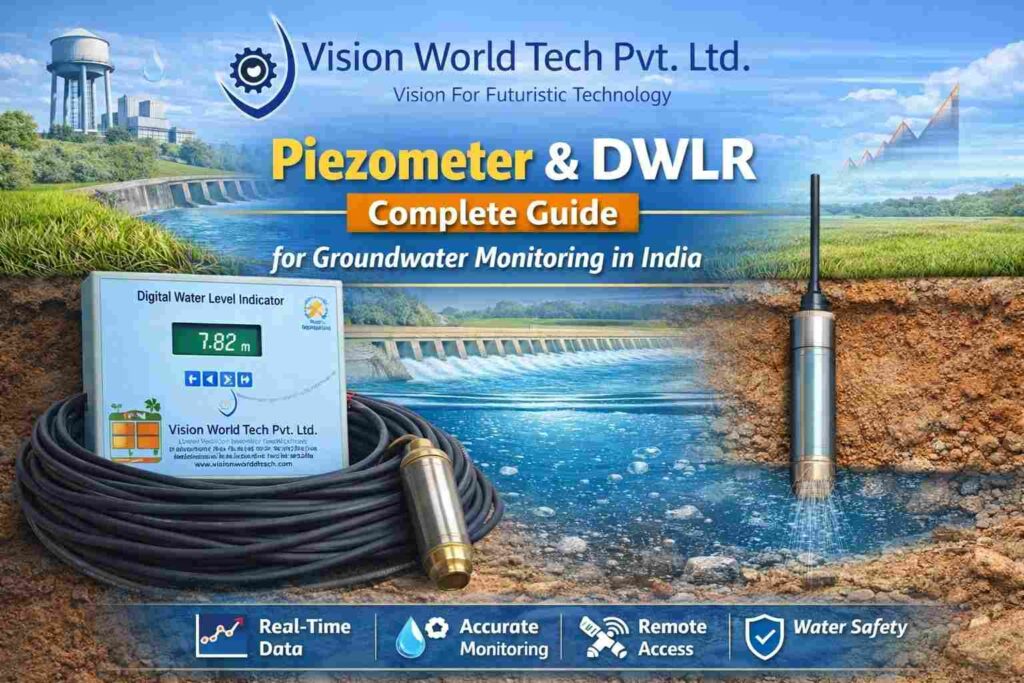
Groundwater is one of India’s most critical resources—supporting agriculture, industries, and daily life. But with rising demand, urbanization, and climate change, monitoring groundwater levels has become more important than ever.
This is where piezometer and DWLR (Digital Water Level Recorder) systems come into play.
These advanced instruments help in accurate groundwater level monitoring, pressure measurement, and real-time data tracking, making them essential for modern water management.
In this guide, we’ll break down everything in a simple way—what they are, how they work, their differences, and why they matter in India.
What is a piezometer?
A piezometer is a device used to measure groundwater pressure (pure water pressure) or water level below the ground surface
It is typically installed inside boreholes or wells and helps engineers understand how water behaves inside soil and rock layers.
Where are piezometers used?
- Groundwater monitoring projects
- Dam and reservoir safety
- Construction & infrastructure projects
- Irrigation systems
- Environmental monitoring
In simple terms:
A piezometer tells you how much pressure water is applying underground, which is crucial for safety and design.
What is a DWLR (Digital Water Level Recorder)?
A DWLR (Digital Water Level Recorder) is an automatic electronic system that continuously records groundwater levels
Unlike manual methods, DWLR systems provide:
- Real-time monitoring
- Automatic data recording
- Remote access (via telemetry)
- High accuracy
In simple terms:
DWLR tells you how groundwater levels are changing over time—automatically and continuously.
Difference between Piezometer and DWLR
Although both devices are used for groundwater monitoring, they serve slightly different purposes.
| Feature | Piezometer | DWLR |
|---|---|---|
| Function | Measures groundwater pressure | Records water level digitally |
| Operation | Manual/sensor based | Fully automatic |
| Data Recording | Limited | Continuous data logging |
| Monitoring | Periodic | Real-time monitoring |
| Technology | Basic | Advanced digital system |
Modern systems often combine piezometer + DWLR + telemetry for complete monitoring
Why Groundwater Monitoring is Important in India
India is one of the largest users of groundwater in the world. According to various studies, groundwater supplies nearly 60% of irrigation water and 85% of drinking water in rural areas.
However, excessive groundwater extraction has led to declining water tables in many regions.
Monitoring groundwater levels using piezometers and DWLR systems helps authorities:
- Identify groundwater depletion
- Implement water conservation policies
- Manage irrigation systems efficiently
- Ensure sustainable water usage
2. Groundwater Level Monitoring
Piezometers and DWLR systems help track groundwater fluctuations, which helps authorities manage water usage effectively.
3. Dam and Reservoir Safety
These instruments are widely used in dams and reservoirs to measure pure water pressure inside soil structures. Monitoring this pressure helps prevent structural failures
4. Infrastructure and Construction Projects
Large construction projects such as tunnels, bridges, and buildings require groundwater monitoring to maintain structural stability.
5. Irrigation and Agriculture
Farmers and irrigation departments can use groundwater data to plan water usage efficiently.
6. Environmental Monitoring
Groundwater monitoring helps detect contamination and maintain environmental safety.
How a Piezometer Works
A piezometer is installed in a borehole or well that reaches the groundwater zone. The device measures the pressure of water within the soil or rock.
The working principle involves:
- Installation in Borehole
- Water pressure measurement
- Pressure Conversion into Water Level
- Data Recording or Monitoring
Modern piezometers may use sensors that transmit pressure readings to monitoring systems.
How DWLR Technology Works
DWLR systems use electronic sensors to measure water level automatically.
The typical DWLR system includes:
- Pressure sensor
- Data logger
- Battery power supply
- Telemetry communication system
The sensor measures water pressure and converts it into water level data. The data logger records this information at regular intervals and sends it to monitoring centers.
This allows engineers and authorities to monitor groundwater conditions remotely without visiting the site
Key Features of Modern Piezometer and DWLR Systems:
Advanced groundwater monitoring systems offer several features that improve data accuracy and reliability.
High Accuracy
Modern sensors provide precise measurements, which are essential for engineering and hydrology projects.
Automatic Data logging
DWLR systems automatically record water level data at specific time intervals.
Remote Monitoring
Telemetry integration allows real-time monitoring from remote locations.
Long Battery Life
Most DWLR systems operate on long-lasting batteries, reducing maintenance needs.
Weather-Resistant Design
Industrial-grade construction ensures reliable operation in harsh environments
Applications of Piezometer and DWLR Systems
Piezometer and DWLR technology is widely used across different industries and government projects.
Groundwater Monitoring Projects
State groundwater departments install these devices to monitor groundwater levels across regions.
Dam Safety Monitoring
Monitoring pure pressure inside dams helps prevent structural damage.
Mining Industry
Mining companies monitor groundwater levels to prevent flooding and ensure safety.
Infrastructure Projects
Construction companies use piezometers to monitor soil pressure and groundwater levels during excavation
Smart Water Management
Modern water management systems integrate DWLR data to create intelligent monitoring networks
Advantages of Using Piezometer with DWLR
Using both technologies together provides a complete groundwater monitoring solution.
Key advantages include:
- Continuous groundwater level monitoring
- Accurate pressure measurement
- Real-time data access
- Reduced manual monitoring effort
- Improved water management decisions
This combination is especially useful for government groundwater monitoring networks.
Choosing the Right Piezometer and DWLR System
Selecting the right monitoring equipment is important for accurate results.
Here are some factors to consider:
Measurement Accuracy
Choose systems with high-precision sensors for reliable data.
Data Logging Capacity
Ensure the device can store long-term monitoring data.
Remote monitoring capability is important for large projects
Durability
Industrial environments require rugged and weather-resistant equipment.
Technical Support
Reliable technical support and installation services are essential
Vision World Tech: Reliable Piezometer and DWLR Solutions
Vision World Tech provides advanced piezometer with DWLR systems designed for accurate groundwater monitoring.
Their solutions are widely used in:
- Government groundwater monitoring projects
- Dam and reservoir monitoring
- Industrial water management systems
- Environmental monitoring programs
With advanced technology and reliable performance, these monitoring systems help organizations manage water resources effectively.
Conclusion:
Groundwater monitoring is essential for sustainable water resource management in India. Instruments like piezometers and DWLR systems provide accurate and reliable data that helps engineers, government authorities, and industries make informed decisions.
By combining piezometer pressure measurement with digital water level recording technology, organizations can achieve continuous monitoring and better control over groundwater resources.
As water management becomes more critical in the future, adopting advanced monitoring solutions will play a vital role in ensuring long-term water sustainability.
FAQ
If you are looking for Piezometers, DWLR (Digital Water Level Recorder) or complete groundwater monitoring solutions in India, Vision World Tech is here to help.
We provide reliable instruments, expert guidance, and dedicated support for all hydrology, irrigation, and groundwater projects.
📧 Email: [email protected]
📞 Call/WhatsApp: +917742717000
🌐 Website: https://visionworldtech.com
📍 Location: Jaipur, Rajasthan
👉 Contact us today to get a quote or technical consultation for your groundwater monitoring project.